
Opening Day
And Hope Springs Eternal

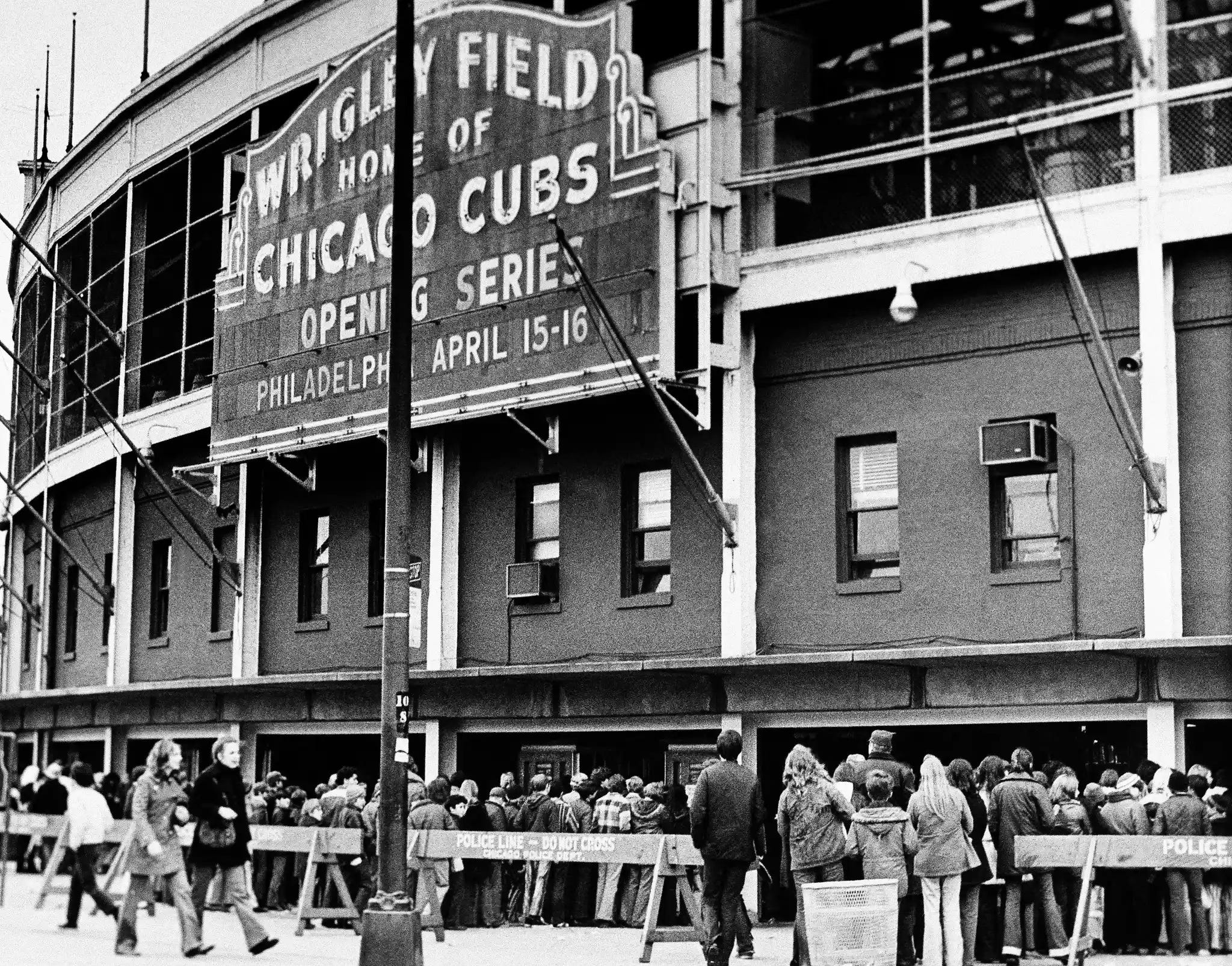
In American society we mark changes of season with ‘seasons’ of sport. While these ‘seasons’ span multiple calendrical seasons, their opening day usually marks a significant point in the annual cycle; none more so than professional baseball, which comes roaring in like a spring blizzard on the heels of the vernal equinox. As such cyclical markers are wont, this one conjures up memories of the past, with its glories, disappointments, and outright sorrow.
Although I spent the first half of my childhood in Southern California, and experienced my first game at then-new Dodger Stadium, I was always a Cubs fan. My family were from northern Indiana, where a radio or even television signal from Chicago could be coaxed with the proper antenna. My favorite uncle, Charles Harkin, lived in the Indiana suburbs. My family had a regular summer routine in those days; we would pack up the station wagon and move to Indiana for the summer, with my father (a school teacher) taking up summer employment. I would find my own things to do on the banks of the Wabash; but the special treat was a week or even longer spent with my Uncle Charley up in Chicagoland.
Charley and his wife Dotty, both high school teachers like my father, had sufficient leisure time in the summer that trips into the city were frequent. Many of these trips were educational in nature; visits to the world-class museums, as well as to local historical landmarks such as the Biograph Theater and the site of the St. Valentine’s Day Massacre. (My uncle was the proud owner of a brick from the building that had been torn down, complete with what I imagined to be a bullet hole). But the finest excursions from the viewpoint of a young boy were those to Wrigley Field. In those days tickets were by general admission, meaning the earlier one arrived the better the seats available. My uncle insisted on an early start and military discipline to ensure seats behind home plate. There, under a cloud of cigar smoke emanating from a crowd of gentlemen wearing suits and ties, and the occasional fedora, I saw from a very short distance some of the game’s greatest players. Ernie Banks was of course the local favorite, but the visiting team brought its own legends: Willie Mays, Willie McCovey, Roberto Clemente and, a little later, Pete Rose, Johnny Bench, and the Big Red Machine of Cincinnati.
One cannot talk of the Cubs in this era without mention of the 1969 season. This, it must be remembered, was one year after the awful summer of 1968 in which the city bared its teeth to the world and gave the Presidency to Richard Nixon. The ‘Chicago Seven’ were on trial that following year, as terms such as ‘Yippie’ and ‘Groucho Marxist’ came into being. The 1969 season offered a hope of redemption, and in midsummer that hope looked strong indeed. With a team featuring four future Hall of Famers: Banks, Ferguson Jenkins, Ron Santo, and Billy Williams, they led the newly-created East Division of the National League all through the summer. But a loss in mid-September to their frequent nemesis the Pirates, combined with an unprecedented winning streak by the New York Mets, relinquished the lead to the upstarts. There were no Wild Card slots in those days.
Talk to any Cubs fan of a certain age and you will hear stories about 1969: the crushing disappointment and sense of injustice (the Mets?), as well as the ability to deal with it and move on. Indeed, it was a good life lesson for one destined by birth to a father who had been an all-state quarterback to be a lifelong fan of American sports. You lose more than you win; that makes the rare victories all the more precious. Of course, the Cubs did finally make good on their promise ten years ago; a victory that will forever be tainted in my mind by the election results that followed a few days later.
Baseball, more than any other sport, has been a favorite topic for a certain type of American intellectual (a tradition I am perhaps honoring here). My former colleague at Emory, the anthropologist Bradd Shore, has written about baseball that it differs from other sports in that it has no clock. Games, in theory, can go on for as long as they need to, and it has not been uncommon for a game going late into the night to be suspended and finished at a later date. I agree that this makes baseball unique among our modern sports. But the ancient ones, such as wrestling, also were atemporal. Like wrestling, baseball features an agon between two individuals, the pitcher and the batter. The Greeks would have understood.
In the end, though, the lack of a clock reflects the ‘season’ of baseball: its seemingly endless summer days, which allowed a child to watch his heroes play the beautiful game or, indeed, catch tadpoles on the banks of the Wabash river. Such days were of course not truly endless, but the intimations of immortality they offered were more precious than gold.